Clear, honest pricing
Full supply and fit with our most popular grass starts from £75 per m². Here's what affects the price, and how artificial grass compares with the cost of keeping a real lawn.

With an ever-increasing number of artificial grass suppliers joining the market, including DIY stores and carpet shops, there is a wide range of synthetic grasses available and, as a result, a wide range of price points for different uses, budgets and customers. The average fake grass cost will also depend on whether you want it installed and, if so, what your artificial turf is being installed onto or replacing.
At the bottom end, you can find synthetic grasses for around £10 per square metre. These budget grasses are often sold in DIY stores, where you can pick up a relatively small roll and pop it in your trolley. They typically have a low pile to keep costs down and are likely to be imported from somewhere like China, with limited protective treatments applied. They are mostly used to lay over a patio for a slightly more comfortable play surface for small children, or as a softer, greener base for pots and ornaments.
Proper artificial grasses for a full lawn replacement cost around £30 to £40 per m² for a good all-rounder, with more expensive options available.
We provide a range of quality fake grasses and are happy to talk through the merits of each with you.
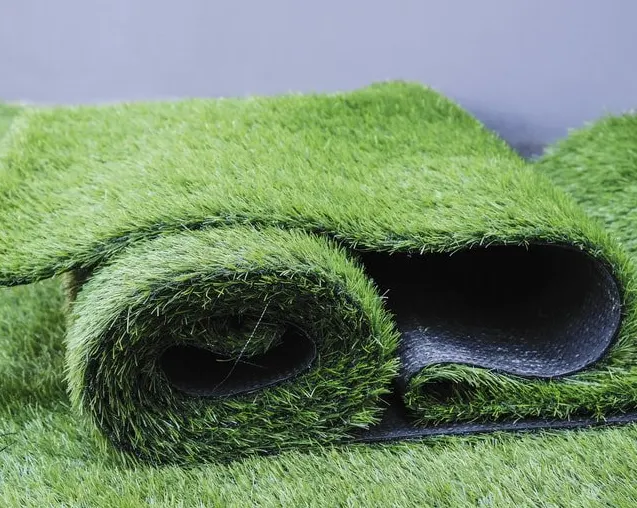
The cost of an artificial grass installation varies with the size and type of installation. The lowest-cost option is fitting on top of an existing hard surface such as decking or concrete. This is when synthetic grass is used to give a slightly softer, more appealing finish, and water already runs away from the hard surface below. Our installer simply makes sure the fitting is tight and secure and any joints are as undetectable as possible. Sometimes an additional rubber or foam underlay is requested for an extra layer of cushioning. This adds to the material and installation costs, but will generally still be cheaper than a full lawn replacement.
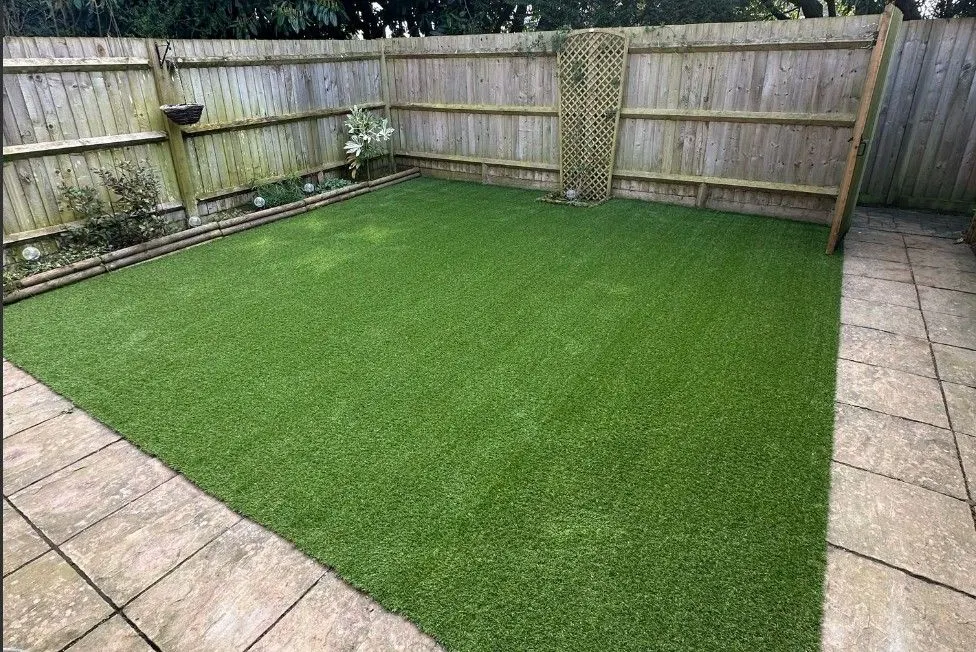
When replacing an existing lawn, the installation means removing the existing turf and digging down to a depth that allows a suitable aggregate layer, followed by sand, weed membrane and the artificial grass itself. It often also includes fitting a frame and additional edging and fixings, which add to the total cost, as does fitting around curved edges. These small costs won't make a big difference overall, and you would be looking at around £40 per square metre in fitting costs, including the additional sub-base materials, for a lawn replacement.
The key when looking at any cost is to look beyond the obvious direct costs and take indirect and opportunity costs into account too, to understand the true cost. These terms are more commonly used in accounting. Direct costs are the obvious ones, such as the cost of materials or the total cost of having an artificial lawn installed. The initial cost may seem expensive, especially as you already have a lawn, but the key to deciding whether anything is expensive is to ask yourself 'compared to what?' and 'over how long?'
To understand the true cost of artificial grass versus real grass, consider what it costs to maintain your existing lawn each year. Some figures are easy to calculate, especially if you employ a gardener, but even if you do it yourself you will be paying for lawn feed, patch repairs and weed killer. The big indirect cost you probably won't factor in at first is your time: time spent applying weed killer, repairing patches and, of course, mowing. What is your hourly rate? How would the costs look if you included the time you spend on lawn maintenance, and how else could you use that time? This is where opportunity cost comes in. An artificial lawn gives you back time to spend however you wish, so what would you pay to sit sipping cocktails instead of mowing the lawn?
An artificial lawn will typically last 15 years, if not longer, so factor in 15 years' worth of mowing hours, lawn feed, weed killer and sprinkler watering, and you will realise that an artificial lawn ends up being quite cheap.
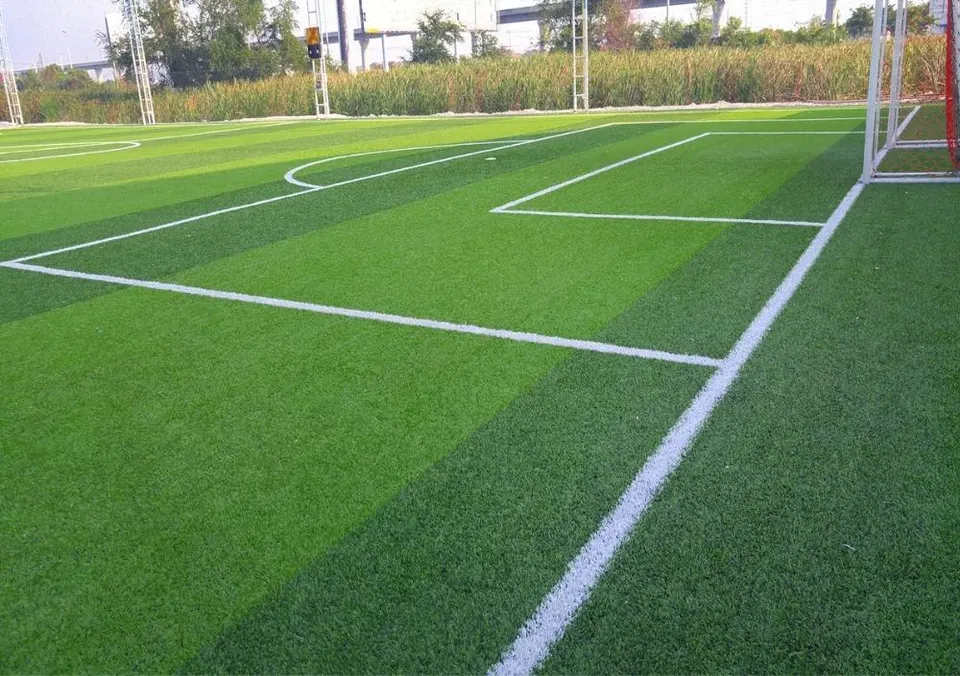
Whilst astro turf and artificial grass are essentially the same thing, most people say astro turf when talking about sports pitches and the shorter, sand-filled synthetic pitches many of us have played on over the years. These 2G and 3G astroturf pitches were the early artificial grasses used to give more all-year-round playing surfaces, and the same principles apply when looking at astro turf costs. In fact, natural grass pitches need far more maintenance, and throughout the year there will be many occasions when a muddy, waterlogged pitch means no sport can take place.
For many leisure businesses, schools and universities, having at least one astro turf pitch means outdoor sport can take place almost all year round, giving you a much more versatile facility that can be hired out for various activities. The return on investment will depend on how much you can hire it out, but running well-organised leagues alongside training sessions or social sports hire means you can make money from your artificial grass sports pitch.
With our lease plan, there's no better time to install or upgrade to a low-maintenance 4G astroturf pitch. Please get in touch to discuss our astro turf costs in more detail and arrange a full survey.
Our prices apply across Reading and the surrounding area, including Tilehurst, Caversham, Theale, Woodley, Shinfield, Twyford, Earley, Sonning, Pangbourne, Calcot, Charvil, Wokingham, Henley-on-Thames and Wallingford.
© 2026 All Rights Reserved | Artificial Grass Reading